What Does a Messy Desk Mean?

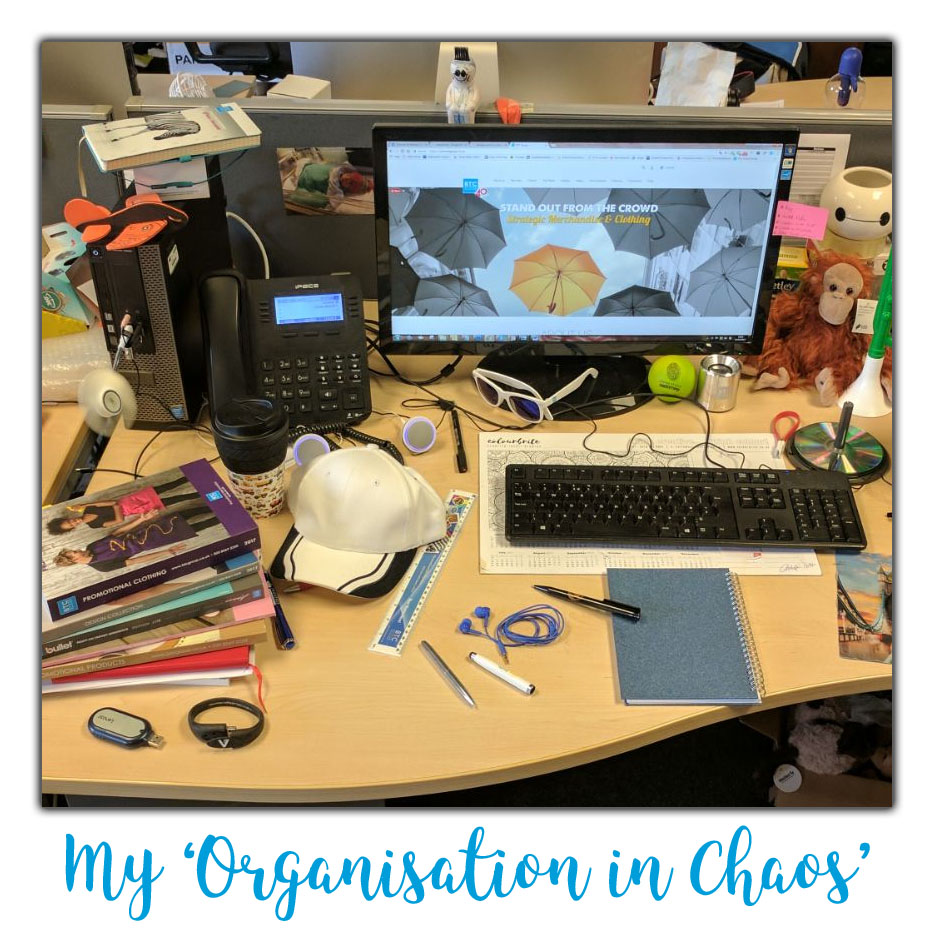
When it comes to a messy desk, I will hold my hands up and admit my desk isn’t exactly the tidiest, as a matter of fact I prefer to use the terminology ‘organisation in chaos!’ If you are like me and have stacks of papers and books with pens, stationary and other random objects of interest sprawled across your desk, have no fear, thanks to a recent study it has been found that there is method to our madness. Messiness is traditionally mistaken as a sign of laziness, but the truth is it has actually been found (when it comes to your desks) that it could be linked to being a creative genius.
The study fundamentally tested two groups of people, one group operating in a disorderly working environment and the second working in a tidy environment. The results showed that although both groups of people produced the same level of work in terms of quantity, but when the quality was concerned, the creativeness and interesting elements were far superior in the work produced by the people in the disorderly work area. It wasn’t just creativity that differed, the same researched also showed that people with messier desks are more likely to takes risks, opposed to those with tidy desks who are prone to following strict procedures, and working in an orderly manner.
“Disorderly environments seem to inspire breaking free of tradition, which can produce fresh insights,” researchers said. This isn’t particularly a recent thought, it also resonates through history, some of the world’s greatest minds were famously known for having cluttered and unkempt desks; possibly because geniuses would rather concentrate on producing new and creative ideas, than spend time putting everything away in a complicated filing system. When you have everything on your desk it is all within arms-reach, allowing you to let your creativity run wild. But I totally get it, there are two definitely still geniuses with immaculate desks, I think ‘horses for courses’ is the best analogy when it comes to the tidiness of desks.
Like I mentioned organisation in chaos is my chosen desk strategy (that’s my argument and I’m sticking to it!) and although to outsiders, it may look messy, to me it is organised, and maintaining that organisation is important. On the promotional market there are some fantastic, desk organisation tools which would look amazing on all desks. A great example of these is the foldable smart cube as shown in this video. When fully packaged arrives in cube form then when unrolls provides you with small compartments, pen pots and sticky notes that would look fantastic on any desktop, messy or tidy!
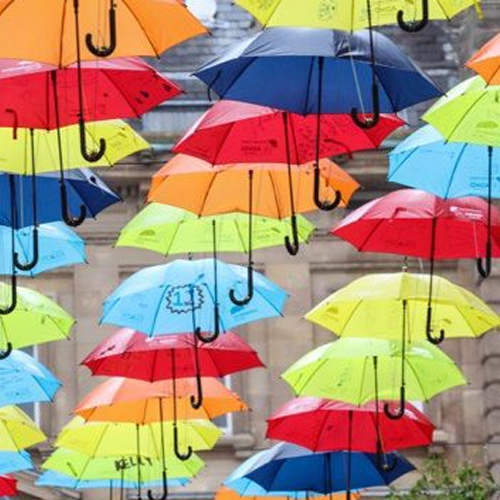
 The impressive display has been created by Liverpool based ADHD foundation. Chief executive of ADHD Foundation, Dr Tony Lloyd, said: “The name for the project was actually chosen by the brilliant children who work with the foundation, ADHD and autism are ‘umbrella terms’ for a whole variety of neurodevelopment difficulties and we want to highlight that fact and challenge the stigma of what can be ‘invisible’ disabilities.” Local businesses are also getting involved, for just £250 they can sponsor one of the umbrellas, which in turn will pay for a whole programme of support for families.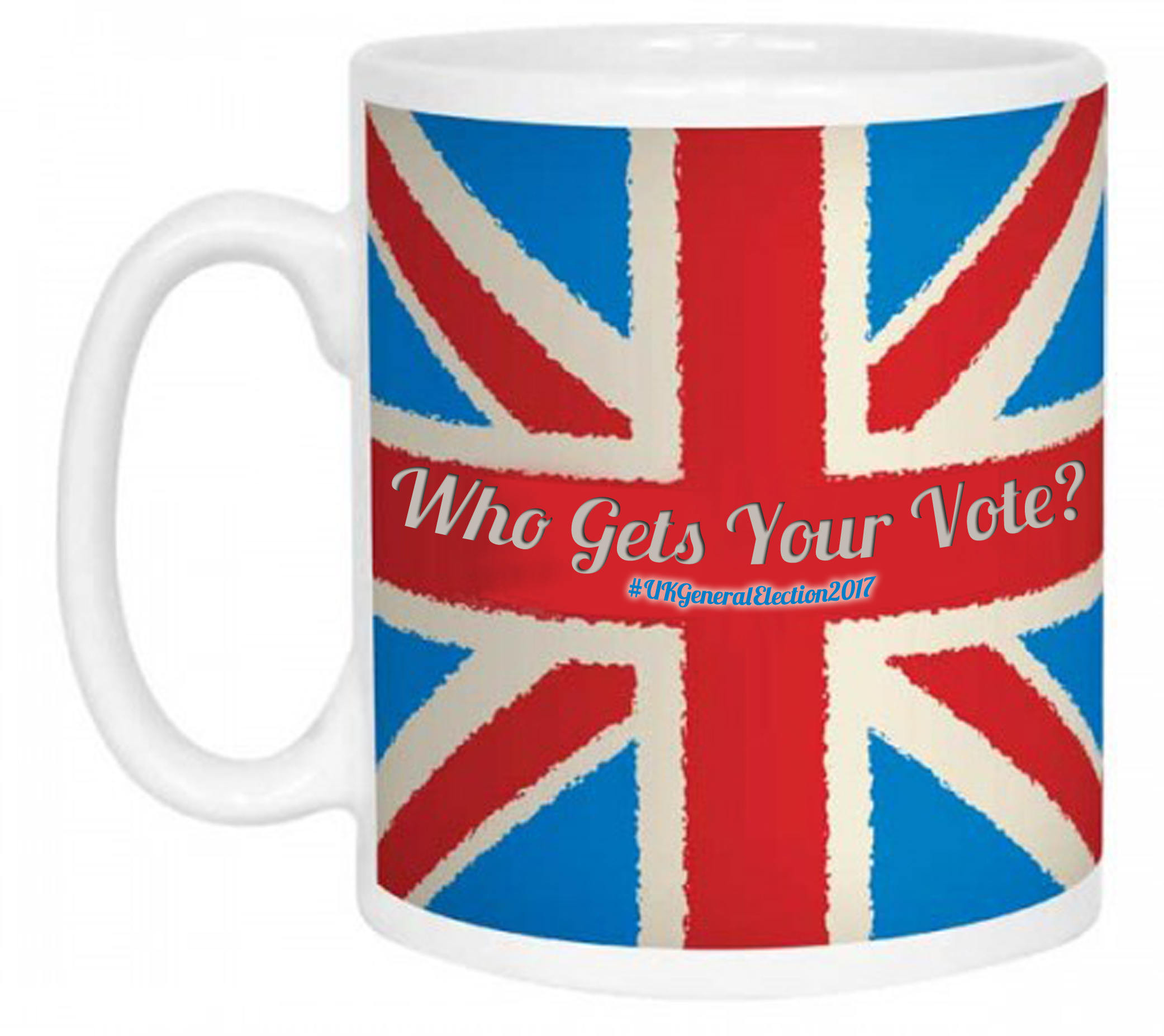
 Today in the UK millions of people will be visiting polling stations across the country exercising their democratic right to vote for their chosen political party. Each party has their own manifesto, idea on how to run the country, and criticisms of the other parties. One thing they do have in common however is that they all have campaign merchandise! Here at BTC Group we’re always interested in the use of promotional merchandise for all kinds of reasons, with political use being one of them.
 Starting with the Labour webshop, the first thing you notice when you visit their products page is information, information, information. Almost all of the products on the first page of their shop are leaflets and posters containing information on their manifesto, education reforms and some leaflets containing information on why not to vote for the other parties. The promo product that did make it to page one are balloons, which is not surprising as promotional balloons provide an inexpensive way to visibly have your brand seen. In the world of politics even without seeing the printed logo, just the colour of the balloon can identify which party is being promoted. The labour party shop has 4 more pages with merchandise e.g. pens, stickers, mugs, t-shirts etc. totalling a healthy selection of over 80 products to choose from.
 When you find yourself on the Liberal Democrat’s webshop you will notice their product offering is considerably less than the other parties, with 23 products in total. Giving a smaller range generally isn’t a bad thing. A Study by TED speaker Sheena Lyengar in 1995 shows that shoppers are more likely to purchase jam from a small selection of flavours rather than a large selection. We know that all studies are situational and may not work in every instance, but it might work here for the Liberal Democrat merchandise. The second thing I notice is their product range is very similar to the product ranges we put together for charities, containing products like badges, fundraising boxes, keyrings, pens, clipboards, balloons, flags and bags, all products we have actually stocked for a charity client of ours. These products are considered the essentials for campaigning; the one thing that I see lacking from these essentials is t-shirts. Campaigning t-shirts are at the forefront of the other stores but for one reason or another is not included in the Liberal Democrat offering.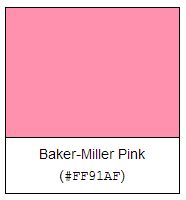
 He then went on to test this study in 1978 alongside Dr. John Ott, together they experimented with a certain shade of pink, and had incredible results exhibiting that this shade of pink now known as Baker-Miller Pink did consistently show reductions in hyper excitability. The colour is called Baker-Miller pink because when doing the tests at the Washing State Department of Corrections, only Commander Miller and Warden Baker were willing to have their rooms fully painted in this colour to allow the tests to proceed.
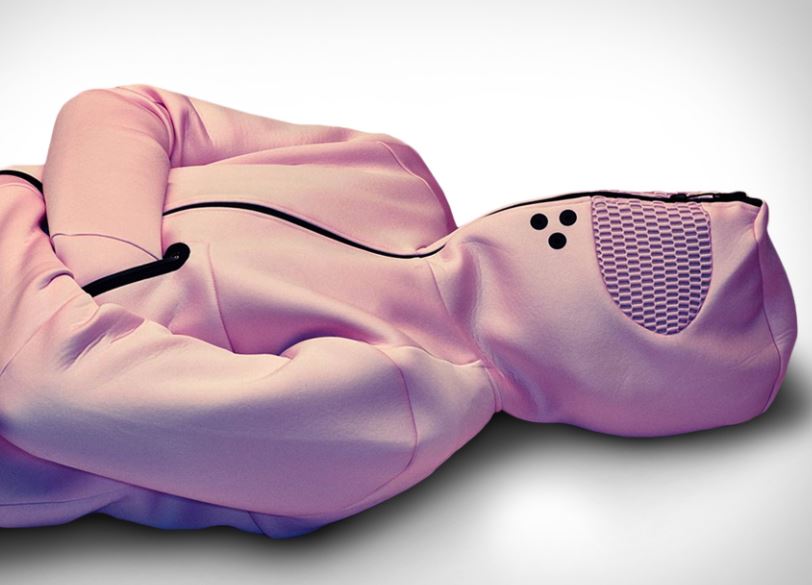 So how does this translate to creating a hoodie that relaxes you? London based creators Steve and Nick Tidball created a super technical hoodie especially for athletes, so they could wear the item and relax before a big event. Steve and Nick are quoted as saying they would like to treat athletes the way NASA treats their astronauts. The hoodie is perfectly designed to calm you down, it possesses a hood that zips all the way over your face, apart from the fact that across the eyes it has a section of Baker-Miller coloured mesh which, doesn’t allow people to see in but provides you with the ability to look out but with a baker-miller pink filter providing 80% visibility. The mesh also slows heartrate by slowing your rate of breathing, delivering a two pronged calming feature through the colour and the fabric. The hoodie also has two very specifically placed pockets perfect to rest your arms over your diaphragm, that act not only as a protective sling, but allow you to be naturally in tune with taking deeper breaths. If all of this wasn’t enough the hoodie also comes with its own soundtrack that puts the wearer into a state of meditation whilst regulating brainwaves.
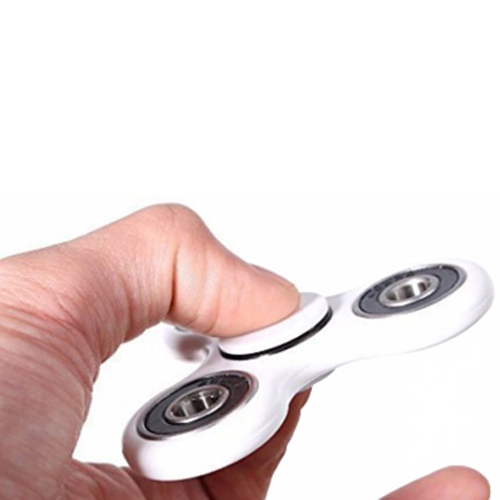
 It is hard not to notice the fact that fidget toys are all the rage at the moment, they are absolutely everywhere, on the high street, on the internet and more than likely you or a family member own one, or have at least seen played with one. History tells us that fads do not need to make sense to become prevalent, I mean do you remember how popular the Crazy Frog was? Fidget toys on the other hand at least have an underlying justification for their existence.
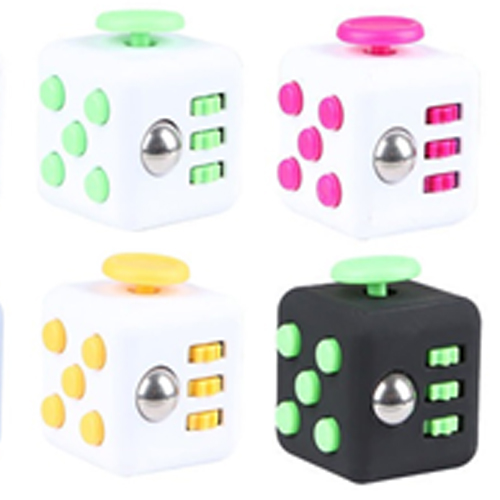 In a study into the condition ADHD (Attention-Deficit/Hyperactivity Disorder) it actually showed that young boys with this disorder performed better in memory tests if they were allowed to swivel in their chair. As a matter of a fact the ever so popular fidget spinner was initially created as a soothing toy that could help children release pent up energy. Catherine Hettinger originally applied to patent her fidget spinning device in 1993, and pitched it to several toy companies. After Hasbro decided not to pursue the idea, Catherine let the patent lapse in 2005. From this point it is unclear where the resurgence in the fidget spinner came from, but it got to the point that in December 2016 it was identified as the must have office toy for 2016.
 With more and more companies using and producing great promotional merchandise, it began to become hard to stand out. Companies found it essential to be the ones with the most innovative promotional tools. This movement lead to a whole new niche in the market which was the need for promotional merchandise suppliers. Companies would no longer produce the merchandise themselves, they would go to these companies and give a list of what they want, and then it was on the shoulders of the promotional merchandise traders to make, source and brand the desired items.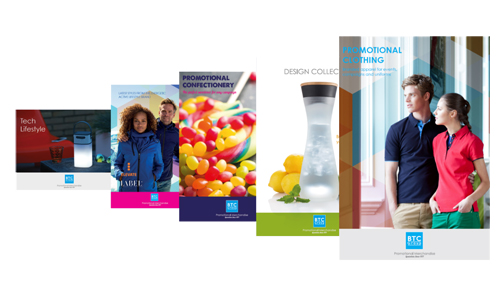

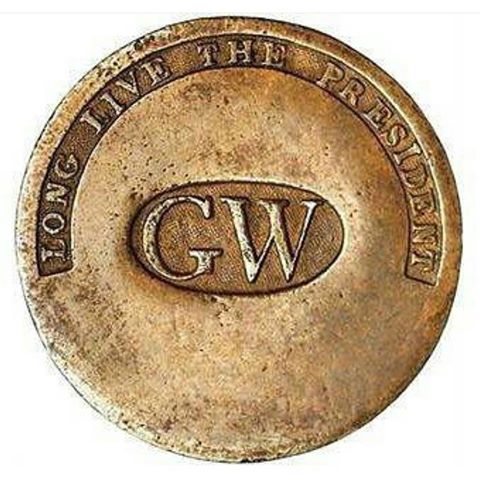
 We shall start with the foundation that the world of promotional merchandise was built on. Promotional products originate from 18th century USA. The year was 1789 and the United States of America was going through vast transformations. The war for independence against Britain had ended only 6 years before, and the great commander in chief George Washington had since retired to Mount Vernon Virginia. But this retirement was short lived when persuaded to attend the Constitution Convention in Philadelphia. It was here that he was elected president of the convention, which thus led him to be the President of the United States of America.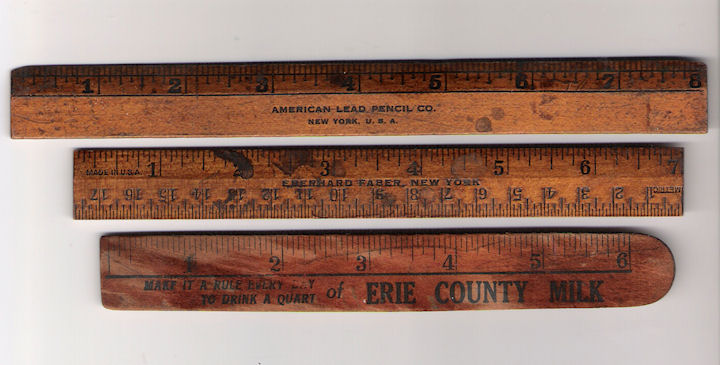

 When it comes to knowing the future technological trends, yes there is an element of educated guesswork and judgment, but the majority of the information is gained from field and digital research. For example when I was compiling information on what technological trends would be successful this year, I based my information on news stories, marketing data, articles, and one massive source was conferences and exhibitions from the largest global technology companies. It is conferences like the F8 conference hosted by Mark Zuckerberg himself which took place earlier this week, that gives you a flavour of what tech companies are up to in the following months. The great thing about conferences and exhibitions in April is they are a great indicator as to whether or not trends determined at the end of last year or earlier this year are actually being worked on, because chances are if the largest corporations aren’t investing in those trends, the possibility of them hitting the mass market is significantly diminished.
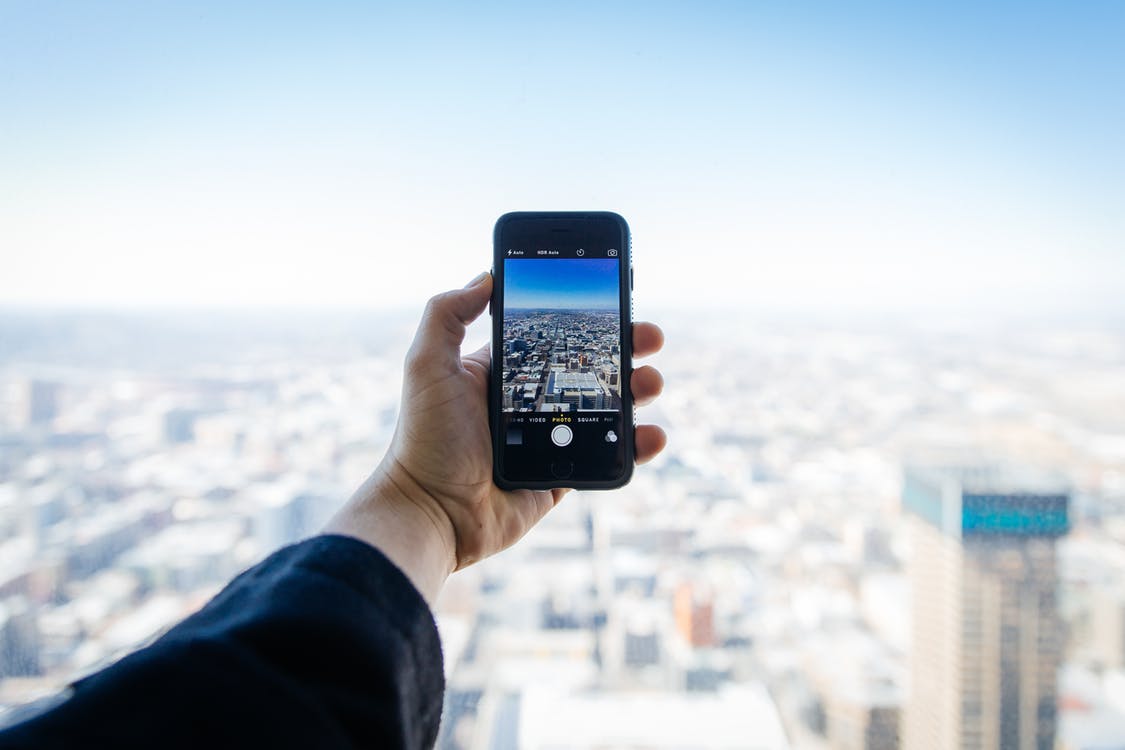 One of the biggest things coming out of F8 is that Facebook are placing a significant amount of interest into the world of augmented reality. As described in my technological trends piece, augmented reality started gaining wide attention last year with the introduction of one of the most popular mobile games ever made, which had an augmented reality element. Facebook’s F8 conference’s big message this year was that your mobile device camera is destined for so much more than just taking pictures. What Facebook are aiming to achieve is a secondary augmented layer that, using your camera, is overlaid when looking at your smartphone screen. An example of this could be holding your camera up to the front of a restaurant and you are able to see other people’s reviews, access to the menu and book a table at the click of a button.
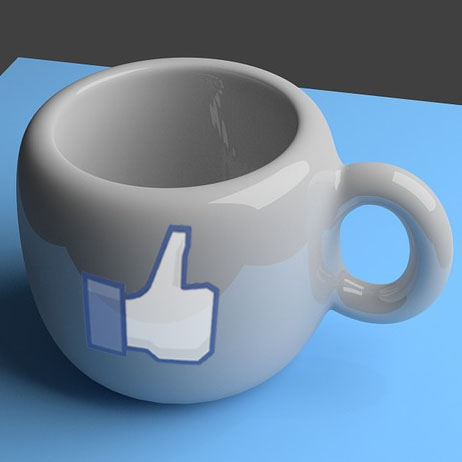 So why are we so bothered about augmented reality, the truth is at the moment at least, augmented reality needs a visual trigger in order for the augmented layer to kick in, now this visual trigger can be anything, a painting, a magazine, a screen print…. You can see where we are going with this, we are in the printing and branding business if our products can be used as triggers for augmented reality not only does that work fantastically for the world of augmented reality, but if gives promotional products another layer of depth. The example Mark used when talking about augmented reality involved coffee mugs, now imagine if these coffee mugs were branded, you are taking a simple affordable promotional product, and using it in a technological revolution.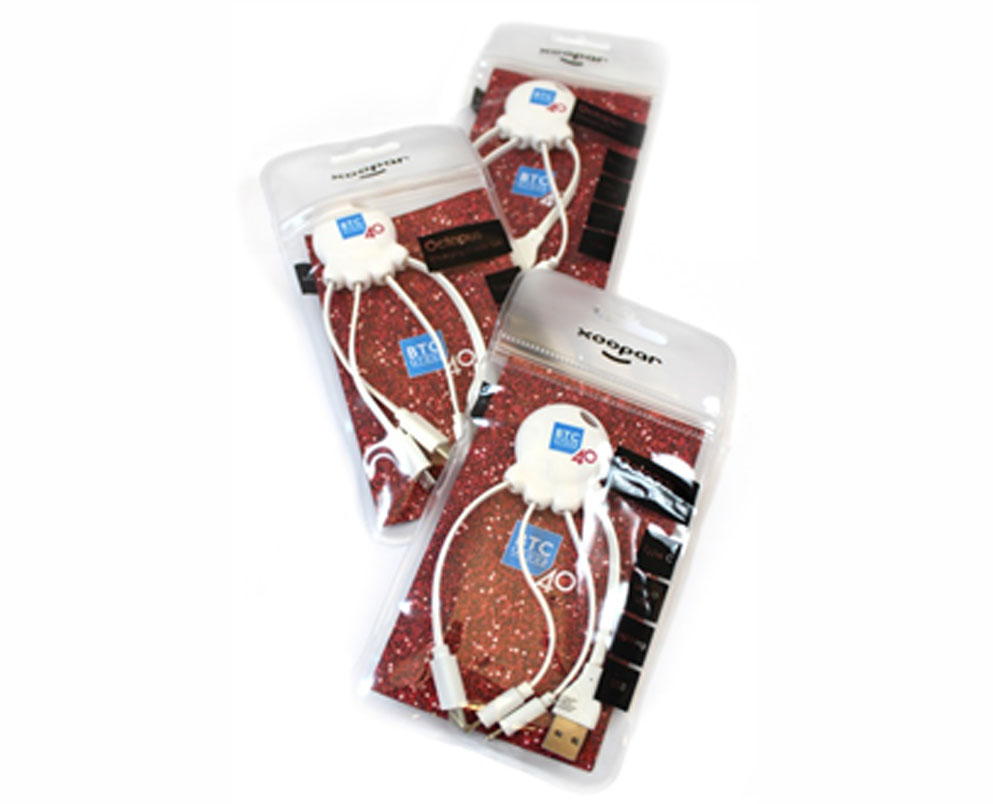
 If you haven’t seen what USB type C is yet we have a great article regarding the how we think this is going to be a trend in technology this year you can see this